
May 21, 2026
I'm in the middle of your picture*

Hello.
In a way, this post is a continuation of last week’s, which was a digression about need—what artworks need and what viewers need from art. Now, I’m thinking about the needs related to art and art careers.
A majority of people on earth—eighty-something percent—maintain religious or “spiritual” practices. These practices—Salah, Shiva, church on Sundays, meditation, etcetera—are not careers (though some careers form around them). What about art? Is art a spiritual practice? That depends on how you do it. If art (making or viewing) is something you do regularly to engage with the ineffable, I’d say it fits the bill, at least in part.
A lot of people recoil at the word “spiritual,” so I’ll use the word transformative—causing a change [a deepening] in outlook or condition. One way to protect the transformative potential of an art practice is to become acutely aware of the nature of our needs and the difference between a practice and a career.
All artists need time and space to work.
Artists who rely on their art for income need buyers or sponsors. Artists in academia usually need a quantity of exhibitions and publications for job security. ( ⚠️ This need of external support can be detrimental to authenticity and transformation.)
Artists seeking personal transformation need the courage to act from a place of uncompromising freedom. ( ⚠️ This can compromise sales and art jobs.)
Many artists feel forced to make—or they unconsciously make—less courageous choices in the interest of securing their wants or needs. Many artists are working in a system that does not provide basic needs like good education, health care, and elder support. This can nudge more conservative life and art choices. I fault no one for taking the safer route to secure basic needs for themselves or others; I applaud it. But beyond survival, we have a lot of choices.
Brené Brown writes “We can choose courage or we can choose comfort, but we can’t have both. Not at the same time.” She is not talking about art though she could be. And Hemingway was talking about art in “The Snows of Kilimanjaro,” a short story in which a writer chooses a life of luxury, fails to develop his art, and is doomed to die of gangrene.
Figuring out how to keep an art practice authentic (true to the deep self and oriented toward transformation), while making a career (that meets basic needs and the desire for comfort) of it is not easy. This is one reason I love when artists have day jobs. But I think it’s possible, with intentionality, to have an art-related job and still protect the integrity of your ongoing (deep-self) non-career practice.
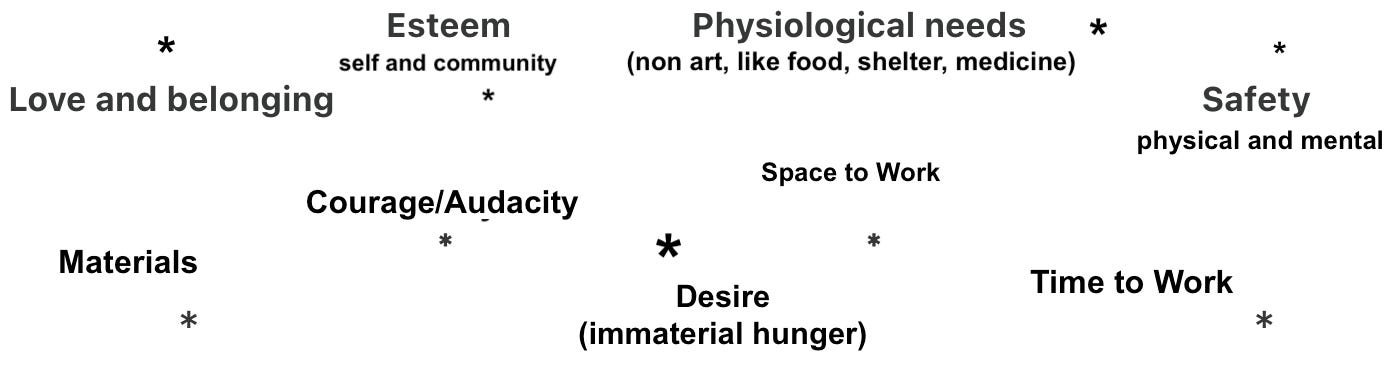
I modified last week’s diagram of Maslow’s needs (freed of hierarchy) shown as fireflies moving and blinking. I added a couple “Transformative” needs and removed Self Actualization and Transcendence because they are byproducts of a life close to Art.
Anyway. Enough of all that.
This week I discovered a local artist I’d never seen. I also returned to Arabi, a third time. Below are a few thoughts about this.
Thank you for reading (Or skimming through the weird parts and looking at the pictures).
Yours in courage and calamity,
e

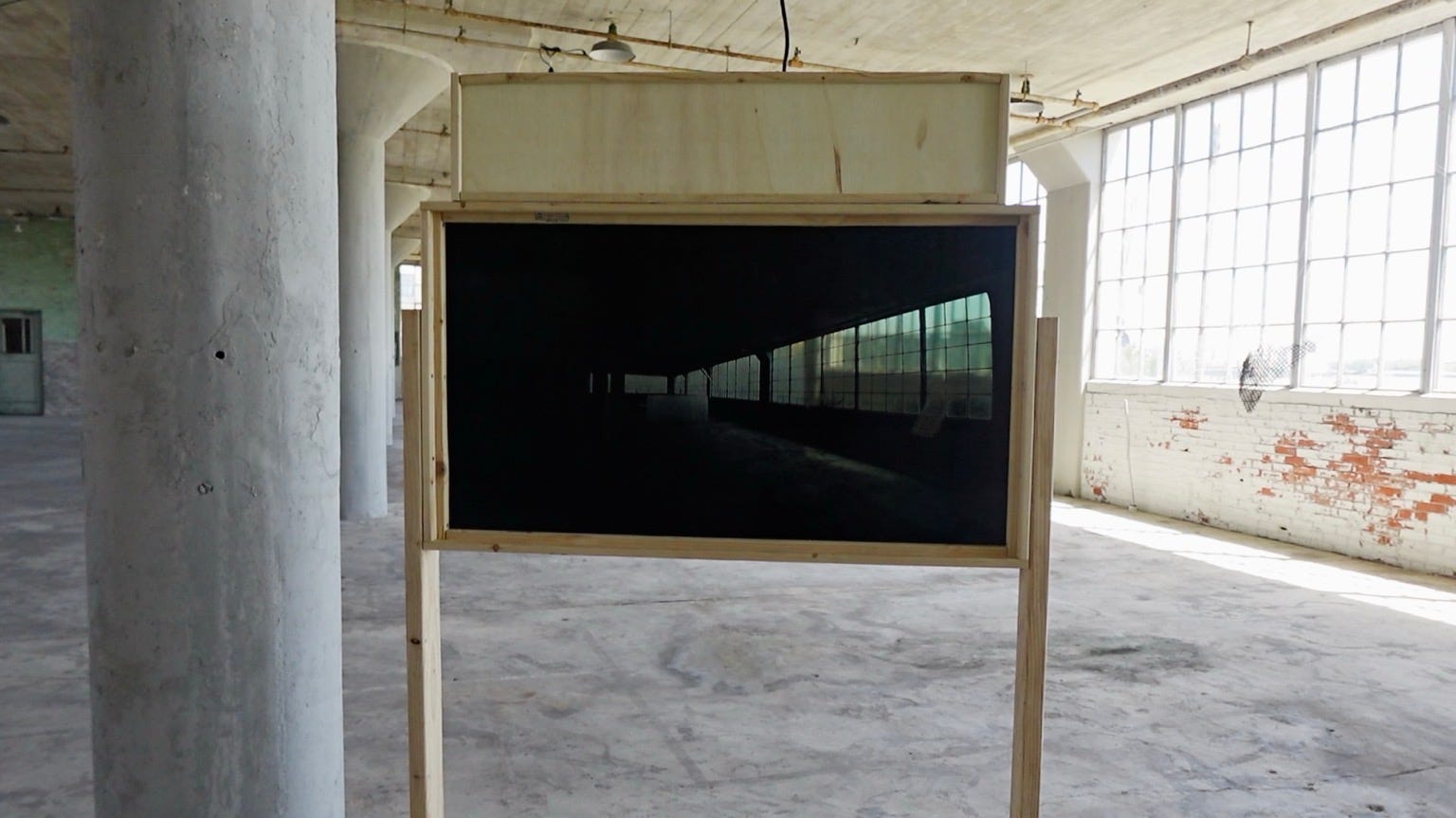
H. Cole Wiley’s Yesterday’s Shadows at The Ford Plant in Arabi
I hope you go see this piece. The exhibition is chaotic—don’t get me started. But this work is special. It uses materials that are not poetic in themselves to create something beautiful and for the viewer, something like wonder.
It’s not healthy (imo) to think too much about audience reception as you are making art. But at some point, audience experience is worth considering. Maybe it’s the artist’s experience in tech that keeps UX at the forefront of his mind when exhibiting art. (Like I said, I love artists with day jobs.)
Of all the work in the show, Yesterday’s Shadows most effectively deals with the space. In a building haunted by a particularly American industrial past, this piece sees ghosts.
An LCD screen, framed with straightforward pine, faces the verrière windows. From the viewing side, one doesn’t see the little camera that also faces the windows, capturing an image every ten minutes. When it’s turned on, the screen is translucent,** so we see in desaturated layers, the windows, a time-lapse of the images captured on previous days, and ourselves in the reflection of the glass.
Here is Cole’s explanation. It’s not necessary to read or know this—I skip the introductions of books—but once I saw the piece, I appreciated the breakdown.
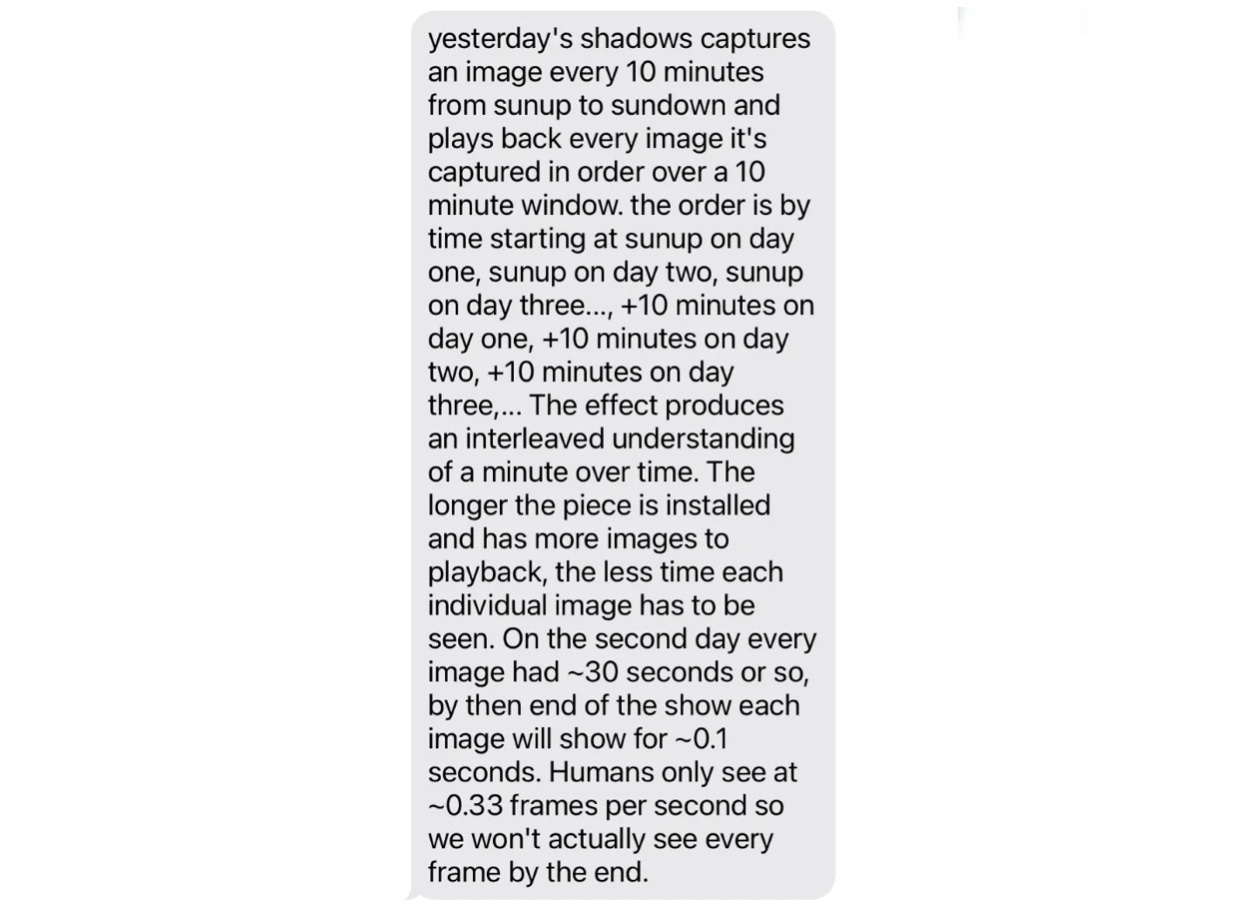
**And here’s why we can see through the screen when it is on but not when it’s off and opaque black.
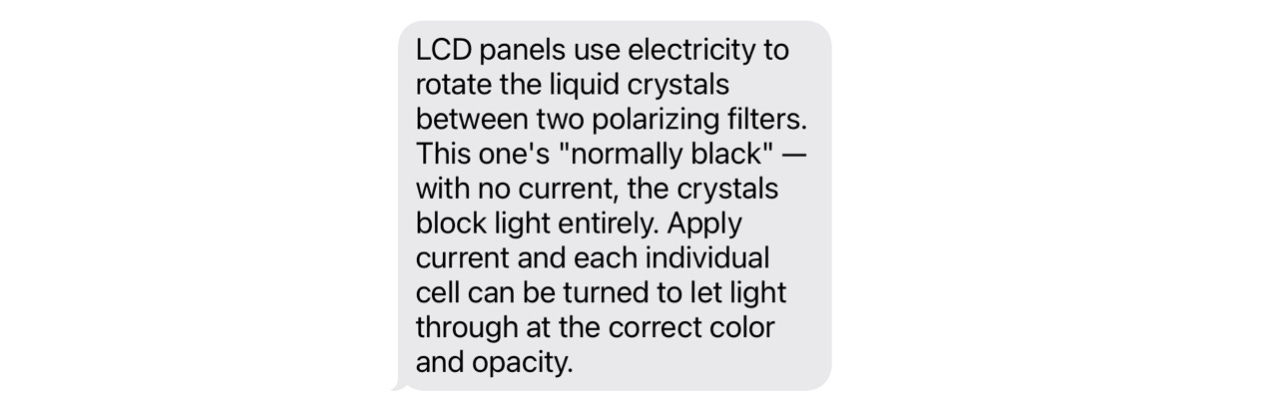
I love they way material becomes medium and metaphor.
Link: H. Cole Wiley
⚠️
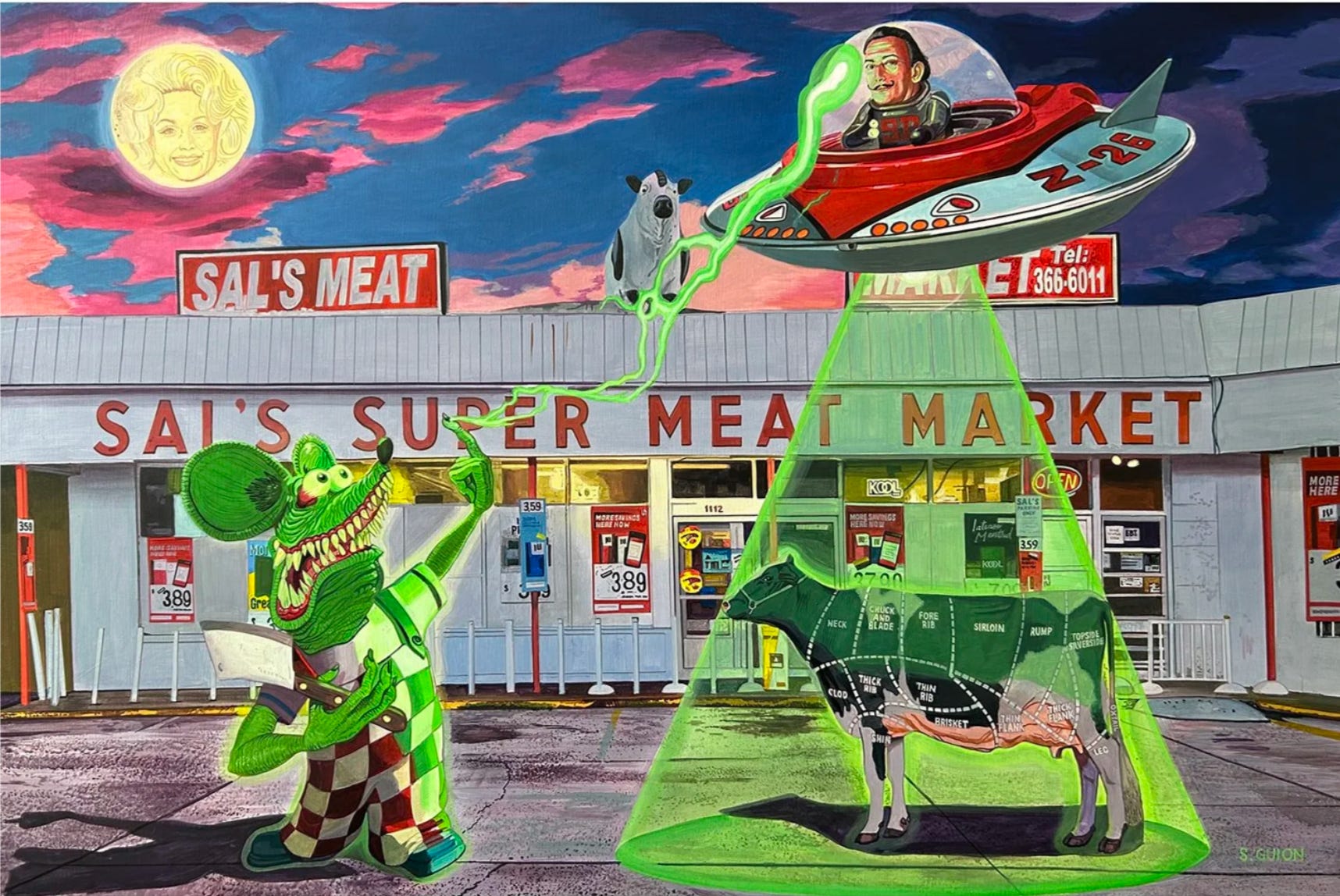
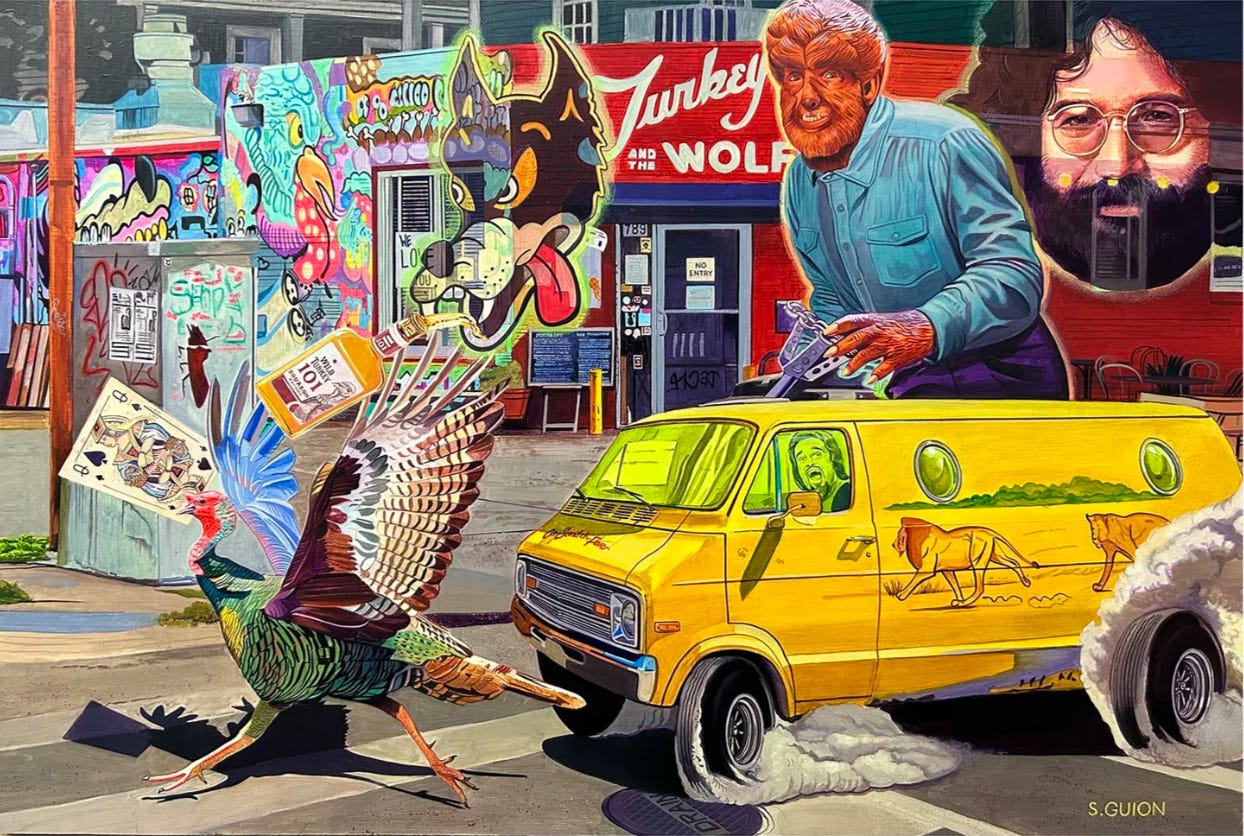
Scott Guion’s paintings at Farrington-Smith Gallery
Photographs don’t do any painting “justice,” but maybe because the subjects of these paintings are widely-reproduced images, the presence they have in physical space is especially lost. It’s an experience to spend time looking at these paintings.
The paintings are not “painterly.” They do not mess around much with the chaos of the material. They are controlled without looking stiff. In fact they are life-like…even though in life, the subjects occupy different media realms (mostly TV but also print and products).
The subjects, for the most part, for most of us, have appeared to us only in images and not in the flesh. Still, these images imprint themselves on our brains and in our sensibilities. These characters mean something to us and populate our thoughts.
The world in the background of these paintings is New Orleans. These places are familiar, dear even. In the foreground are certain holograms, ghosts like the commercial jingles of Saturday morning cartoons that haunt us for decades. I think the true subject of these paintings is the space between the place we occupy, that place as it used to be and the icons who can walk through the walls between one decade and another, the material world and the painted one.
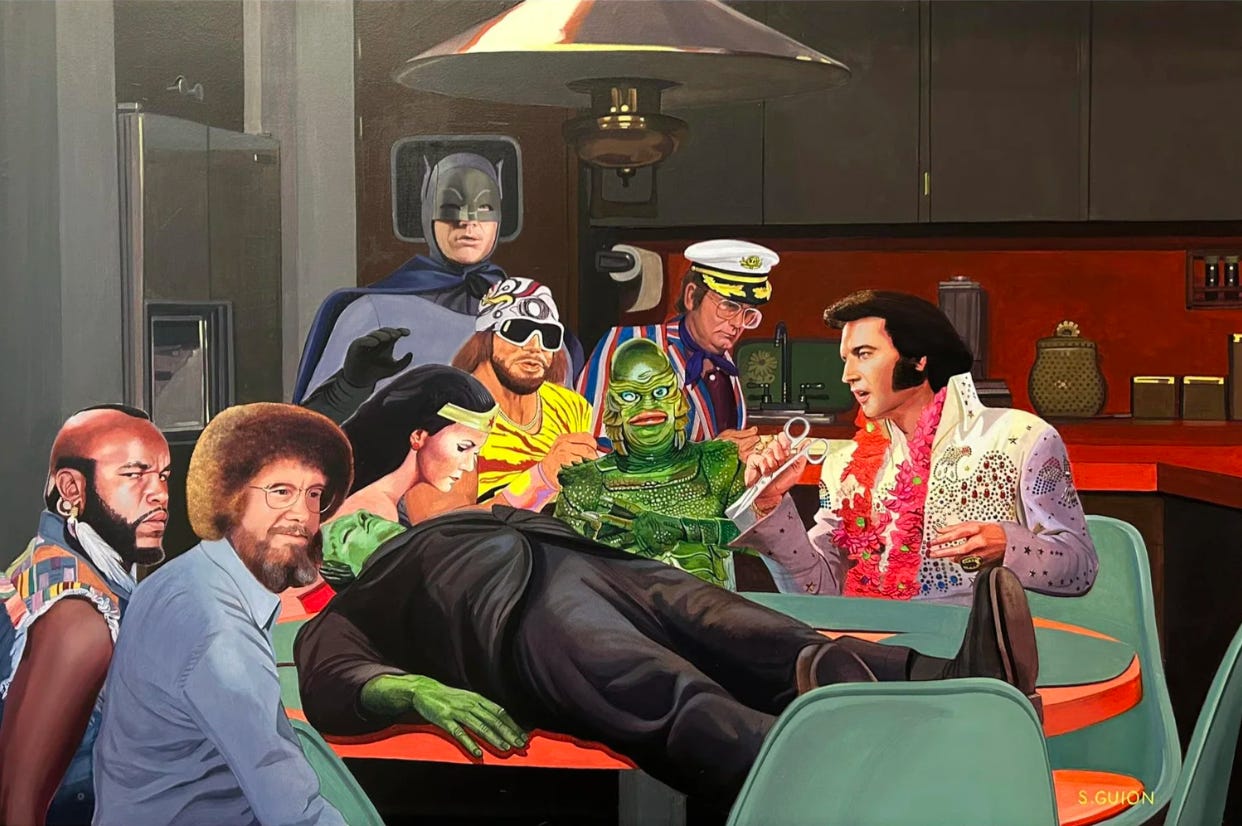
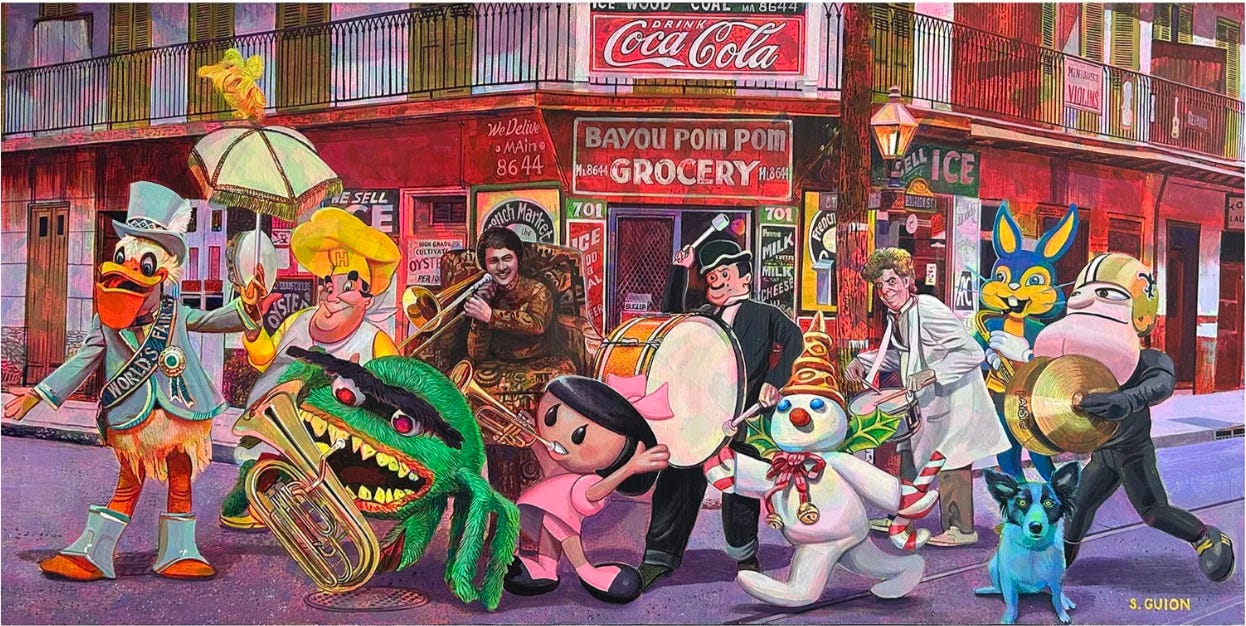
⚠️
Links Scott Guion and Farrington Smith Gallery
